B2C (business-to-consumer) marketing is a strategy of promoting products and services directly to individual customers than down stream through digital supply chain or supply chain. In digital business terms, it refers to usage of channels like SEO, social media, content marketing, email, and paid ads to reach consumers, offer services and build loyalty.
The current global B2C e-commerce market is projected to increase to US $3.89tn trillion in 2026. According to industry data, marketers expect to maintain or increase their consumer-focused marketing budgets, especially Email Marketing reflecting the critical importance of these direct consumer supply chains. Forrester reports for every US $1 spent on email marketing is expected to generate $42 worth ROI
In fact the recent data shows businesses need to spend heavily on digital B2C marketing channels because:
Paid Social media ads, contents and email marketing are the key three channels of digital supply chain for brands to reach their intended end consumers.
Research on mobile devices by customers amounted to a total of 63%.
Mobile searches by end consumers and individual users through google engine stood at 95.13% in December 2025
The guide is designed to aid business owners like you and B2C digital marketers understand the global trends of targeting the individual customer of your product service. In order to understand B2C in detail we’ll discuss current trends, What is B2C marketing, the channels to use according to customer culture, and success metrics.
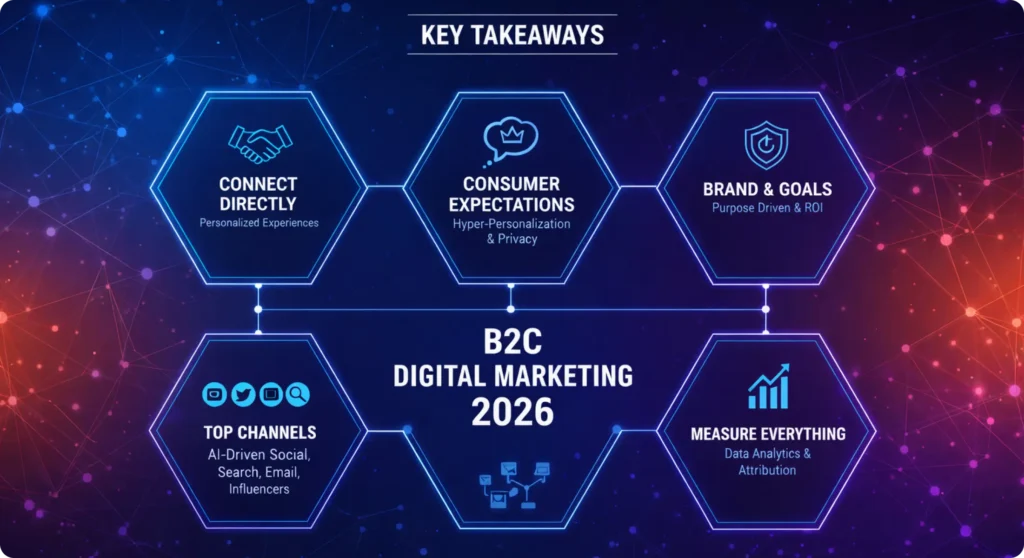
Key Takeaways to understand for B2C digital marketing 2026
Connect Directly: B2C marketing is all about reaching individual consumers through channels like social media marketing, content, email and paid ads.
Consumer Expectations: Customers demand fast, personalized mobile experiences. Brands must “serve value” and stay human, for example by delivering personalized product recommendations and quick responses.
Brand & Goals: Strong foundations of your business matter highly. You need to define a clear brand image and value proposition, build up a detailed buyer personas, and set SMART goals to guide your campaigns for leaving a mark on the consumer.
Top Channels: Do not place all your eggs in one basket, quoted a wise man, it’s the same with usage of communication channels. Do not rely on a single medium and use a mix of digital supply chain channels where your customers spend the most amount of time. In the current marketing scenario the channels include SEO, content marketing, social media (Instagram, TikTok), influencer partnerships, and email marketing.
Measure Everything: Always make sure to track key metrics (KPIs) like conversion rate, customer retention, customer engagement, and their lifetime value. Additionally, use the evolving key data metrics like AI Visibility to optimize and target customers effectively.
What Is B2C Marketing?
B2C marketing (also commonly called consumer marketing) is the entire lifecycle process of selling products and services to the final (individual) customer of your product or service. The marketing strategy involves a planned usage of digital tactics to use targeted ads, search engine optimization, engaging social media content, and personalized emails or SMS directed at the targeted consumer. All of the channels you use target customers should convey a consistent brand message to build a lasting connection with the end consumer.
Effective B2C strategies are designed to consider how consumers shop. Your consumers may have immediate needs but they often engage in research before clicking on the purchase button. Many B2C customers (especially for premium and luxury products) browse several channels and compare options before buying the items. Additionally, B2C consumers often tend to base their decisions on an individual basis, driven by their personal preferences and emotions.
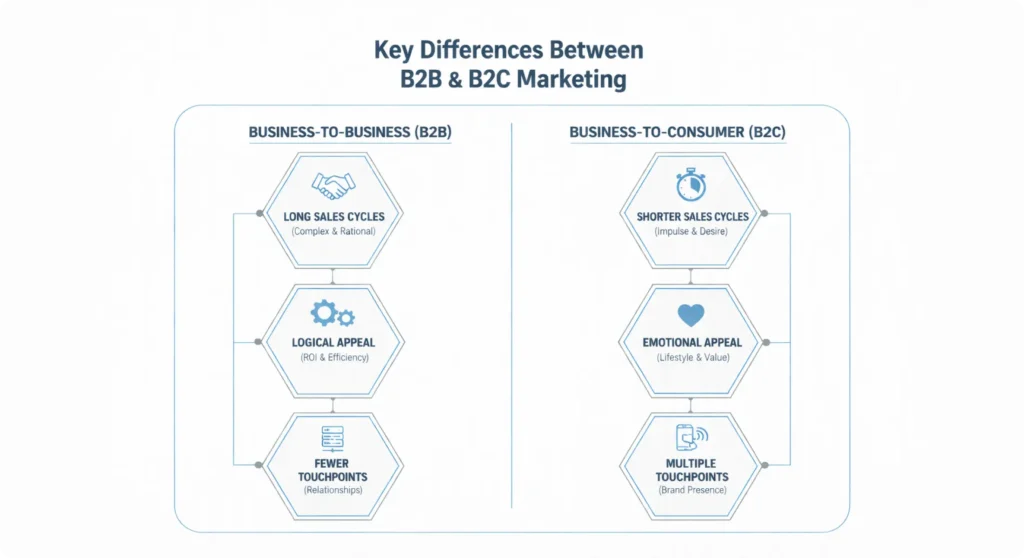
Key differences between Business-to-Business B2B VS B2C marketing
Shorter sales cycles: B2C purchases are often quick and highly impulse-driven quick purchases than B2B transactions.
Emotional appeal: B2C messaging is designed to tap the emotions and lifestyle benefits (e.g., using relatable influencers or compelling storytelling) rather than the features and advantages of the product commonly practised in B2B channels.
Multiple touchpoints: Consumers commonly use several online channels (mobile search, social media, reviews) on their way to buying.
Our team suggests businesses like you to identify the right channels and messaging for your audience. Whether you’re a tech startup in Sydney or a tour operator in Kathmandu, always design a customized and individualised B2C plan for customer groups according to their preferences. Subtly impart your acquisition and brand identity goals in the message
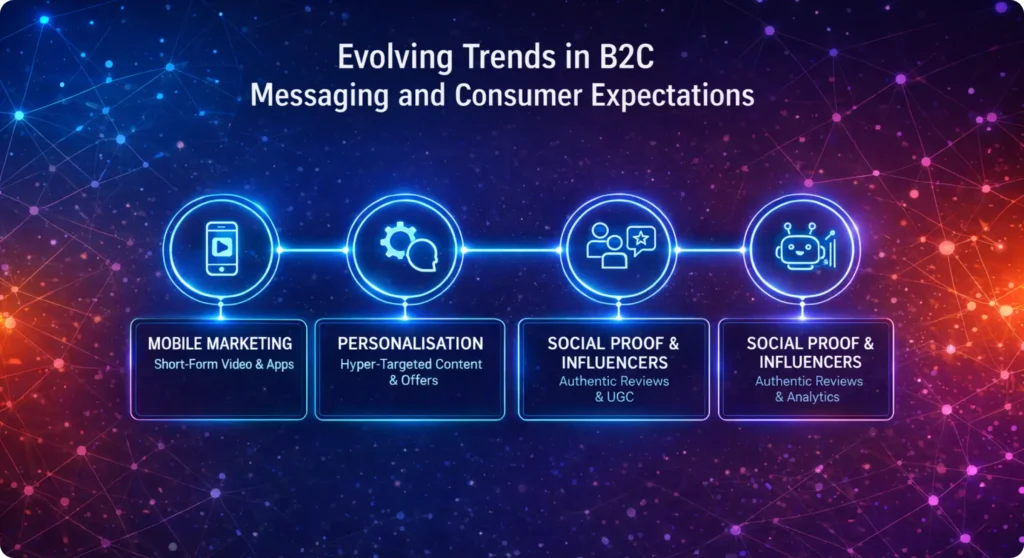
Evolving Trends in B2C Messaging and Consumer Expectations
The B2C landscape has dramatically shifted from an interruption-based marketing paradigm or tactics (like cold calls or impersonal ads) towards offering an immediate value. B2C consumers shopping on the web with their mobile phones expect personalised messages, fast digital experiences, and social proof often reviews. For example, it’s common for online stores to offer personalized product recommendations or send reminder emails when a customer abandons a cart in their email. In addition brand pages and influencers are posting reviews in their instagram and social media highlights sections.
The Key trends to note in the B2C marketing currently include:
Mobile marketing trends: As the increasing number of final consumers use mobile for purchases, use promotion strategies like SMS promotions, chatbots on website, in-app content promotion and push notifications It is reported over 57% of online sales are occurring on mobile devices, hence it’s important to design a fast, mobile-friendly UX (user experience) with easy navigation.
Personalisation: Customers expect offers and content addressing and fulfilling their interests or desires.. Automated email marketing on individual welcome mails, birthday wishes deals, abandoned-cart and wishlist reminders are extremely effective for increasing loyalty. Marketing research studies report triggered emails carry the ability to generate up to 30 times higher revenue than generic email messages..
Social proof & influencers: It is increasingly seen and evident that consumers trust peers and creators from social media. User-generated content UGC, online reviews, and influencer partnerships on platforms like Instagram, Facebook and TikTok can influence purchasing decisions.
AI and automation: Increasing numbers of Big Brands are now using AI-powered tools for instant engagement and recommendations, even Facebook has a META AI for solutions. Your website and customer experience becomes smooth as these AI’s are helpful, fast, and relevantly solve user queries. As one expert puts it, “B2C marketing is about relevance, not reach” – serve value, stay fast, stay human.
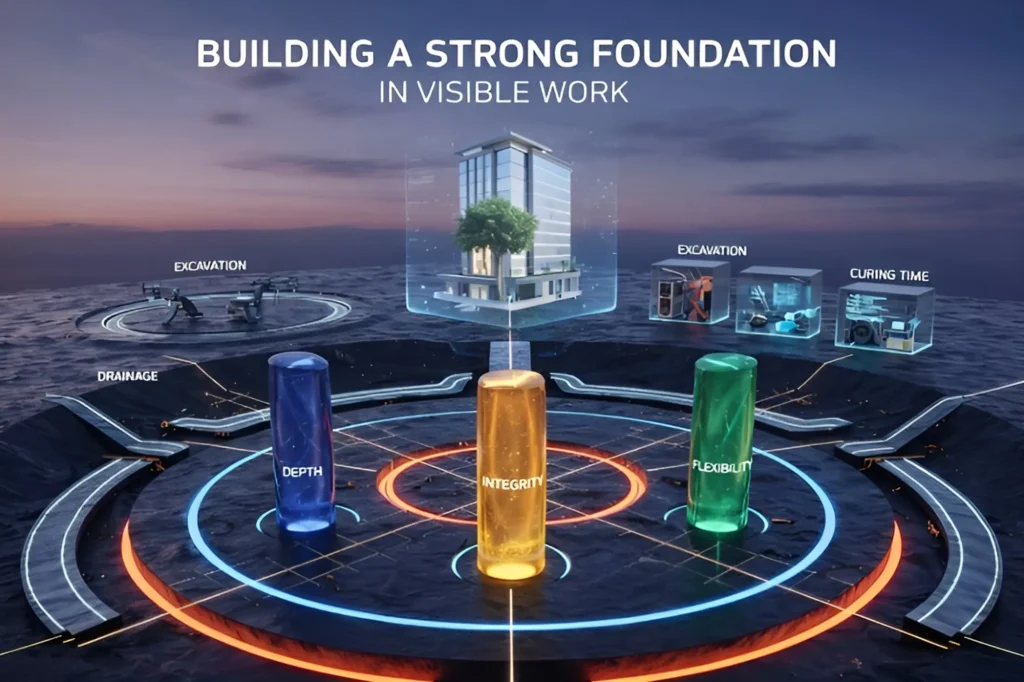
Building a Strong Foundation
Successful B2C campaigns start with strategic fundamentals.
First, define your brand identity: clarify your purpose, values, tone of voice, and visual style so customers instantly recognize and relate to your brand.
Next, craft a clear value proposition that answers “Why should a customer choose you?” – focusing on the benefits and outcomes you deliver to customers rather than explaining your features.
Develop buyer personas after identifying your target customers’ demographics, preferences, and pain points. For instance, you need to know as a travel company operating in Nepal who your top customers are. You need to pinpoint your ideal customer. For example, a Nepal based travel company offering trekking packages can target Nepali expatriate families based in Sydney seeking eco-friendly holiday deals for a higher chance of conversion than a resident family in Kathmandu. Driving and guiding all marketing messages to both families takes equal effort but one has higher chances of conversion than the other.
Finally, set SMART goals (Specific, Measurable, Achievable, Relevant, Time-bound) for B2C marketing efforts. Whether it’s “increase website visits by 30% in six months” or “acquire 2,000 email sign-ups with a Facebook campaign or Instagram,” design clear targets that allow you to track progress and adjust your strategy.
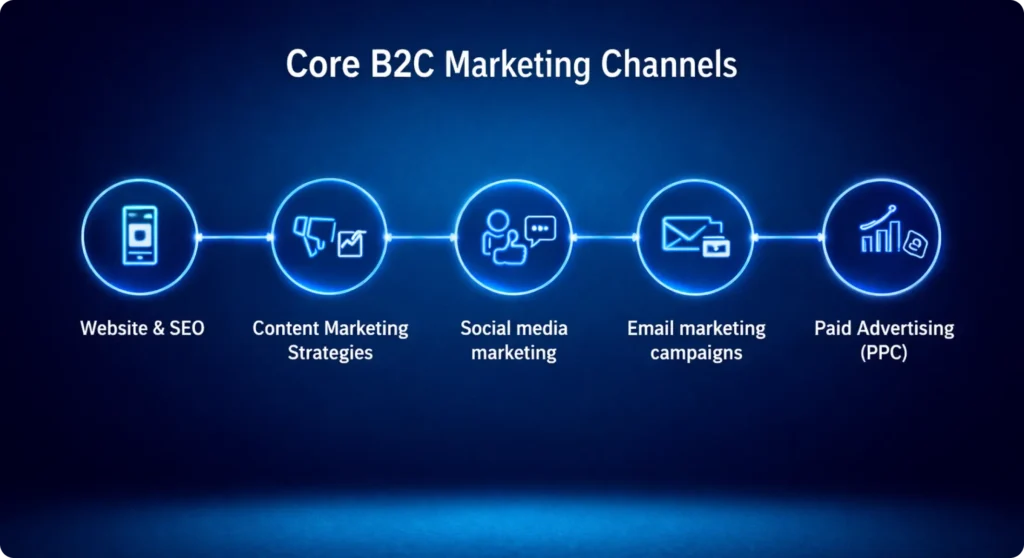
Core B2C Marketing Channels
Makura’s digital experts cannot stress this enough, in order to reach your audience effectively, you have to use a combination of online digital channels tailored towards your final consumers behavior. The Important channels include:
Website & SEO: Your website is the hub of your online presence. You need to ensure it’s fast, has a user-friendly interface, great UX experience and optimized for search engines of your customer profile. Always use targeted keywords (e.g. tech gadgets, aged care services) in content and meta-tags to rank higher. For example, an ecommerce company selling products requires highly structured product data with titles, images, prices, description and so forth for appearing rich in search results and friendly experience. For instance, Makura’s team helped Kathmandu and Australia retailers overhaul their website and employ SEO best practices to increase their organic traffic to 50% within one month from their websites.
Content Marketing Strategies: Content is King and will remain king in the digital marketing space especially for B2C businesses. Plan and create useful, high-quality content designed to directly address customer needs and pain points. These can be blog posts, videos, infographics photos, travel guides, product demos, and more. The quality content builds trust and improves SEO. For example, a Nepali battery company might publish energy-saving tips, while an Australian travel agency might share local itineraries and stories. Make sure your content team is cross functional and helps you develop contents aligned with your brand and audience interests on similar line across all channels.
Social media marketing: Engage customers on the platforms they use For example, regular posts, stories, and reels on Instagram or Facebook can showcase new products, promotions, or behind-the-scenes glimpses can keep the customer hooked and drive traffic along with conversion in the future. In addition to creating content for social media with your team, collaborating with influencers or micro-influencers who resonate with your target market increases your reach and credibility. The user testimonials and influencer’s authentic promotion are powerful word-of-mouth promotion in the tech and travel sector businesses.
Email marketing campaigns: It is important to operate email newsletters and SMS updates to keep your customers informed and encouraged because these often repeat purchases. Design and use segmentation to offer personalized deals like loyalty offer, member discounts and festive offer and set up automated flows of cart reminders, welcome messages, event-triggered alerts to keep the visitor hooked. The action triggered emails like abandoned-cart reminders and wishlist carts can generate significantly more revenue than general marketing email noises. Makura used these strategies to set up and manage these campaigns to nurture leads and convert them into sales for Nepali Travel clients. Nepali clients automating welcome and cart-reminder emails on their travel website increased their cart recovery rate by 20%, converting their failures to ROI.
Paid Advertising (PPC): Invest in targeted ads on Google, Facebook, Instagram, or other platforms to drive repeated and quick traffic. Always pick high-intent keywords for search ads and use demographic/interest targeting for social ads . For e.g., “Flip flops” will be proper for interest and demographic word for Nepal while “Thongs” will be proper for Australians. PPC are especially effective in promoting special offers or new launches on the site.
Loyalty & Retention: Keep customers coming back and make them repeat sales with loyalty programs or excellent service. Create offers with point-based rewards, tiers, or exclusive deals to incentivize purchases again and build loyalty.. For example, a points-based program we implemented for a Kathmandu travel company led to a 15% increase in repeat bookings. Engage with customers after purchase through email/SMS follow-ups or community forums.
Quick Recap of Core B2C Marketing.
Table: Core B2C Digital Marketing Channels with Nepal and Australia Examples
Personalized loyalty offers, member discounts, automated follow-ups
5.
Paid Advertising (PPC)
Immediate traffic & conversions
Facebook local ads, Google ads using Nepal-specific terms (e.g., Flip flops)
Google search ads and social ads using Australian terms (e.g., Thongs)
6.
Loyalty & Retention Programs
Repeat purchases
Points-based rewards for travel bookings
Tiered loyalty programs and exclusive member deals
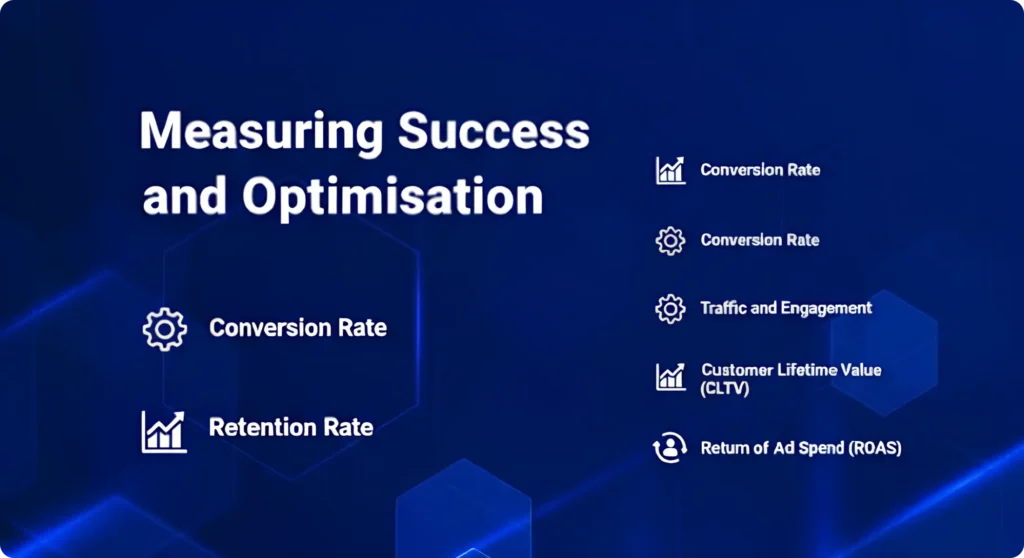
Measuring Success and Optimisation
Tracking performance is very vital and you need to focus on metrics that are directly tied and relevant to your goals. The B2C marketing for a digital supply chain to measure success and optimisation are:
Conversion Rate: The percentage of website visitors that make a purchase or complete a key call to action (CTA).
Traffic and Engagement: Key traffic and engagement metrics to follow are website visits, social media engagement (likes, shares, video views), and email open/click rates. B2C marketers need to emphasize engagement since these signal interest and chances of conversion through directed targeting.
Customer Lifetime Value (CLTV): How much revenue the average customer generates over time is called CLTV. Increasing CLTV through repeated sales is a common B2C goal your business needs to aim for.
Retention Rate: How often customers make repeat purchases is known as retention rate. Retention rates can be improved through loyalty programs and excellent service experience.
Return on Ad Spend (ROAS): For paid campaigns, measure the revenue generated per advertising dollar to ensure profitability.
Use analytics tools (Google Analytics, social insights, CRM data) to gather these KPIs. Your team needs to use A/B testing and real-time analytics to achieve this. For instance, your team might need to test two email subject lines to see which gets more opens, or adjust ad creatives based on live click-through rates.
Regularly reviewing these data allow you to refine the campaigns on the fly for better performance. For example, if a social ad underperforms in Instagram, we can reallocate the budget to a better-performing channel like Tiktok. For expert guidance on measuring and optimising your B2C campaigns, contact Makura Creations. We’ll help you interpret the data, refine your approach, and stay ahead of the competition.
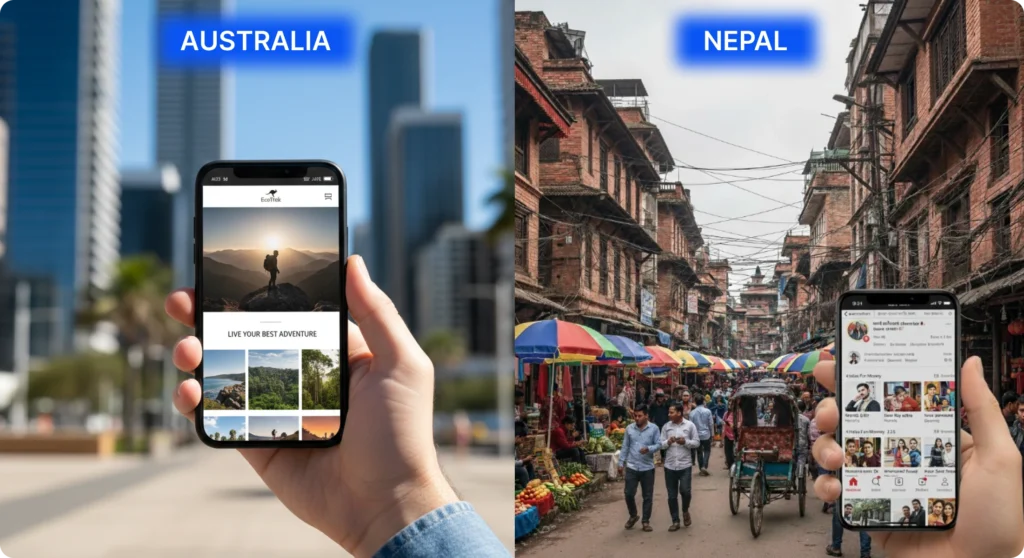
Marketing in Australia vs Nepal
Operating in these two markets requires an in-depth and deep level of local understanding. Australian consumers expect seamless online experiences and high-quality digital content directed right towards the topic. In addition, Australian buyers highly appreciate clear value propositions and strong trust signals (like security badges and positive reviews on google and trustpilot). In Australia platforms like Google and Facebook are widely used, and localised SEO (targeting Australian cities or regions) can boost your businesses visibility.
In Nepal, mobile connectivity through apps and social platforms dominate the B2C marketing space. Over half of the population is now online through increased internet access, and Nepali consumers discover products mostly through Facebook, and TikTok. Campaigns optimized for mobile and available in Nepali language (or popular local languages) can be very effective. The B2C digital marketing space in Nepal is heavily reliant on community endorsements and word-of-mouth reference. Hence, you need to highlight local testimonials and personal stories.
Whether your market is in Sydney or Kathmandu, the principles are similar: focus on your customer’s needs and preferences. Makura Creations tailors each digital marketing strategy to the local context. For example, in Nepal we might run SMS promotions and localized social media ads, while in Australia we might emphasize paid search and email funnels. The goal in both cases is the same: deliver value to the customer and turn engagement into sales.
Table: Comparison of Digital Marketing Platforms and Consumer Behavior: Nepal vs Australia”
S.N.
Market
Top Platforms
Consumer Priorities
Tactics
1.
Nepal
Facebook, Instagram and TikTok
Local relevance and mobile channel access
SEO and chatbots
2.
Australia
Google and Instagram
Privacy, seamlessness
Email and reviews
Industry Applications
B2C marketing best practices apply across industries, but each sector has nuances.
In technology and electronics, consumers look for detailed product information and responsive support.
While in Content marketing (how-to articles, demo videos) the key focus needs to be directed towards active customer engagement for building trust and building loyalty.
For travel and tourism, emotional storytelling, social proof, and targeted social ads (showing beautiful destinations) drive bookings.
Healthcare and aged care services require empathetic messaging and educational content to reassure consumers.
In all cases, your business needs to adapt the approach of your B2C market according to the product and market.
Conclusions
Makura Creations offers comprehensive digital marketing strategies (SEO, content, PPC, social campaigns) to help clients grow. Modern consumers expect personalized, fast experiences on mobile devices, so we focus on serving value rather than interruption. Ready to grow your customer base? Contact Makura Creations today to start building a tailored B2C strategy for your business
You may also like
Our swift-paced team is capable of handling design projects on anywhere and anytime. We’re ready to deliver your best product wherever you are !