You may also like
Our swift-paced team is capable of handling design projects on anywhere and anytime. We’re ready to deliver your best product wherever you are !
There is a question every business owner in Australia, Nepal, and the USA quietly ask themselves at some point of time. Is my website actually helping my business or is it slowly working against my business? The honest answer is that most websites start letting businesses down long before their owners notice, and by the time the signs are visible the real revenue has already been lost.
Currently in 2026, Google’s AI Overviews and Core Web Vitals ranking signals are making the gap between a well-built website and an outdated website even bigger than before. If your site shows any of the warning signs listed in the table below, then you should act right away to avoid being left behind by competitors.
Table: Why visitors leave your website
| Top Reasons Visitors Leave a Website Without Taking Action | |
| Outdated or unprofessional design | 38% |
| Website too slow to load | 53% |
| Not mobile-friendly | 61% |
| Cannot find information easily | 44% |
| No clear call-to-action | 29% |
Source: HubSpot State of Marketing Report 2024
A report on websites on the internet suggests 94% of first impressions about a business are based entirely on website design (ResearchGate, 2024). In fact, the visitor forms the impression in just 0.05 seconds, which means your website either wins or loses trust before the customer reads a single word.
You do not need to be a designer to know when a website looks old. If your website still has cluttered layouts, tiny fonts which are very hard to read on a phone, stock photos from 2010, or a colour scheme not updated in the last five years, your visitors are noticing and leaving quickly. In fact, 38% of users stop engaging with a website if its layout is unattractive (Adobe, 2024), and they decide this in under a second.
In 2026, clean design is not about being flashy but it’s about looking trustworthy and reliable. Businesses in Melbourne, Kathmandu, and New York are all competing for the same online attention, and a modern website design tells customers that you take your business seriously. If your site looks outdated, then the customers automatically assume your service is outdated too.
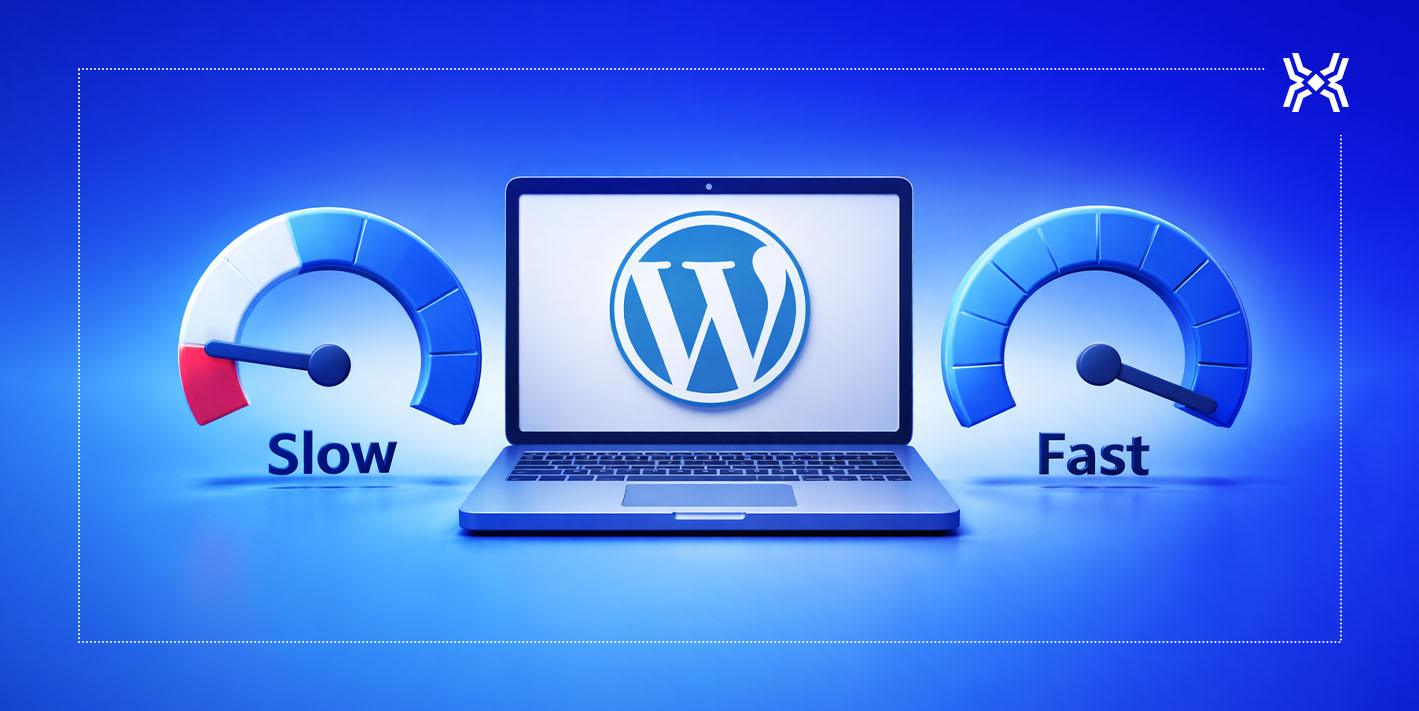
If your website takes more than 3 seconds to load then you are losing over half of your mobile visitors before they even see your homepage. This is not just a user experience problem because Google’s Core Web Vitals use page speed as a direct ranking factor. This means a slow site is also an invisible site in local search results in Australia, Nepal, and the US.
The shift to AI-powered search results in 2025 has made this worse. Google’s AI Overviews and tools like Perplexity and ChatGPT all pull information and data only from fast, well-structured websites. If your site is slow and technically weak then it gets skipped entirely in both traditional SEO rankings and AEO-driven answer results. It is a double penalty you cannot afford. The table below shows the impact of page load time of your website.
Table: Impact of Page Load Time
| Page Load Time | Bounce Rate Increase | Conversion Rate Drop | SEO Impact |
| 1 second | 9% | 0% | None |
| 3 seconds | 32% | 7% | Moderate |
| 5 seconds | 90% | 18% | High |
| 10+ seconds | 123% | 38% | Severe |
Source: Google/SOASTA Research 2024
Over 63% of all web traffic globally now comes from mobile devices, and Google uses mobile-first indexing to rank every website. In simple words, it means it judges your entire website based on how well it performs on a phone. If your site is zoomed out, has buttons that are too small to tap, or shows broken layouts on a small screen then Google actively pushes your pages down the rankings.
For businesses in Nepal, this is especially critical because mobile internet is often the primary way customers browse. For businesses in Australia and the US, Google’s mobile-first ranking means a broken mobile experience directly hurts your local SEO performance and your ability to appear in “near me” searches. Near me searches and the map pack service which are the highest-converting searches in local business, is lost if your site breaks on mobile
According to Google’s report, 61% of users say they are unlikely to return to a website on mobile if they had trouble accessing it the first time (Google Think Insights, 2024). A single poor mobile experience costs you that customer permanently.
If you are getting traffic but getting no calls, no form submissions, and no sales, your website has a conversion rate problem. This is one of the most damaging signs of an outdated website because it means you are spending money driving people to a page which is actively failing to convert them into customers.
The most common causes of low website conversion rates are unclear calls-to-action, too much text and clutter on the homepage, no social proof like reviews or testimonials, contact forms that are hard to find, and a general lack of trust signals. All of these are design and structure problems that a proper website redesign fixes directly. The table gives an overview of solutions, a modern redesign fix that will help your business convert problems into conversion.
Table: Website Redesign solution to fix conversion problem
| Conversion Problem | Root Cause | Redesign Fix |
| High bounce rate | Slow speed or poor first impression | Performance optimisation + new design |
| No enquiry form submissions | Form is buried or broken | Visible CTA on every key page |
| Low time on site | Content is hard to read or navigate | Clear layout with logical page structure |
| No repeat visitors | Site feels untrustworthy or dated | Modern design with trust signals added |
If changing a phone number, updating a price, or adding a new product to your website requires you to email a developer and wait three days then you have a serious problem. These problems are nonexistent in modern website build. A modern CMS-based website lets you make basic updates yourself in minutes, and it does not require any technical knowledge to do so.
This also matters for your SEO content strategy because Google positively ranks website that update on regularly. Google rewards websites that publish fresh, relevant content regularly, and improves their ranking. If your system makes it difficult to update pages or add blog posts, then your site stagnates against competitors that update regularly. Being unable to update your own site is not just an inconvenience, it is a GEO and AEO competitive disadvantage that compounds into losses every single week.
The good news is that every one of these problems is fixable, and a professional website redesign done correctly does not just solve the design problem. It solves the speed problem, the mobile problem, the conversion problem, and the content update problem all at the same time. It also puts your business in a far stronger position for Google AI search visibility, local SEO ranking in Australia and Nepal, and organic search growth in the US market.
The worst thing you can do right now is wait. Every month your outdated website stays live is another month your competitors collect the customers who should have been yours. A positive impact of website redesign is listed below in the table.
Table: Impact of a Website Redesign
| Business Impact After Professional Website Redesign | |
| Increase in mobile traffic | 68% |
| Reduction in bounce rate | 45% |
| Improvement in page speed score | 72% |
| Growth in enquiry / lead rate | 55% |
| Improvement in Google ranking | 63% |
Source: Clutch B2B Research & WP Engine Client Data 2024
At Makura Creations, we offer a free website audit that tells you exactly what your current site is doing wrong and what it would take to fix it. We work with businesses in Australia, Nepal, and the US, and we know what Google is rewarding right now. Book your free consultation today and let us show you what your website should actually be doing for your business. Book Your Free Website Audit Today
Our swift-paced team is capable of handling design projects on anywhere and anytime. We’re ready to deliver your best product wherever you are !